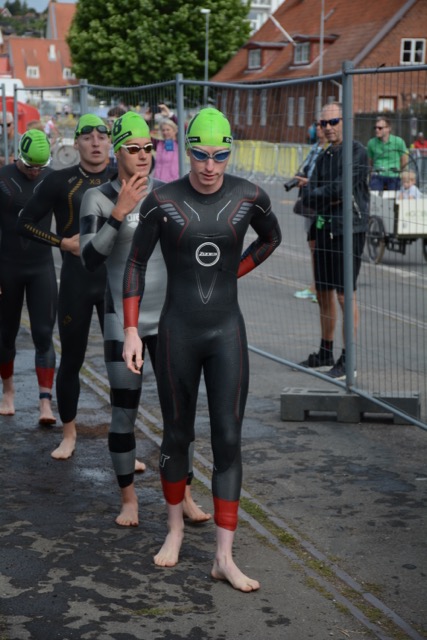
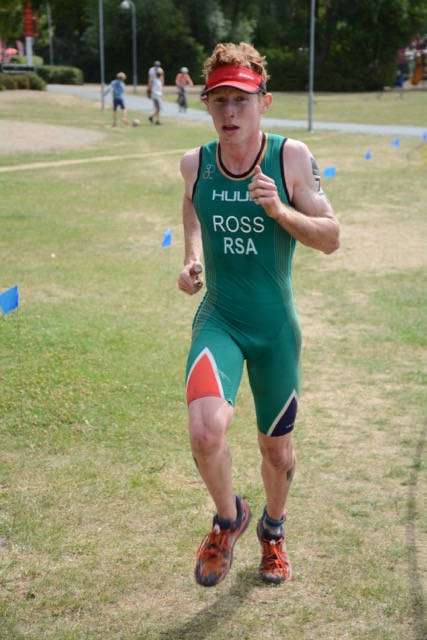
The swim

I have returned to blogging with a forage into what is arguably the scariest part of a triathlon – the swim. Everyone is at least a little bit worried about the swim, and these fears are only heightened if you are a newcomer to the sport. Triathlon is about doing hard things and challenging yourself, and conquering the swim leg is no different. Might as well learn to enjoy it – you can’t do a triathlon without the swim. This article braces you for what will come your way, and ends of with some tips to ensure you get things right on race day. Take what I say with a pinch of salt, and enjoy the read!

What the swim is actually like

The swim start is an absolute dog show. Firstly, standing on the start line, no one really known when the gun will fire, it is one of life’s great mysteries. Sometimes you patiently wait for a few minutes while at other times, you’ll still have your goggles on your head and will be chatting to the person next to you. Invariably someone much slower than you has managed to squirm their way to the front (the epitome of this was seen in a running race I did, where 3 elderly ladies lined up side by side on the front row, ahead of thousands of people in a narrow road. When the gun fired they proceeded to start walking). Don’t be a plonker – you will get run [or swum] over.

The drama doesn’t end there. Behind you, a raging mass of bodies are trying to claw their way over you. Hopefully you manage to find a bit of space where you can actually swim, but not before you have gotten into a physical fight with those around you (seemingly anything goes, street rules apply). Be prepared to get kicked in the face, have your leg grabbed (or at least tickled throughout the swim) and stare deeply into the eyes of the person next to you whenever you take a breath. After about 200 meters of swimming you come to the realization that you’ve started way, way too fast and you start looking for life guards to come to your rescue. It’s at this point I usually question why I entered the race in the first place, and mentally list excuses I could provide for pulling out. Hopefully you decide the reasons to continue racing outweigh those that suggest you stop and settle into a better rhythm – at some point your arms become numb to the pain, and swimming doesn’t feel so bad. I find the rest of the swim fairly relaxed, with the exception of going around buoys marking the way, at which point everyone gets into a fight again for the shortest line.

In a triathlon swim if one thing is certain, it is that you are going to take a massive mouthful of water in at some point. In fact, you’ll be lucky if it’s only one mouthful…This is usually proceeded by a fit of coughing and some breaststroke to help get your breath back. Take a moment to recover, celebrate that you are still alive and then jump right back in.

I know I’m supposed to be focused solely on the race, but in the middle phases of the swim, my mind tends to wander. Perhaps slightly irrationally, it is usually to sharks. I would prefer not being nibbled on by a shark (though I’m pretty sure that would count as a decent excuse to quit the race). I protect myself from attack by these magnificent beasts by swimming in a pack and making sure I don’t lead the race by myself (well at least that’s the excuse I use to make up for my poor swimming ability).

At some stage you’ll have to return to shore. The swim back in always seems to take forever, with the shore never getting any closer. Eventually you will reach the shore, at which point you either get hit by a massive tsunami-sized wave launching a surprise attack, or you attempt to stand too soon and find yourself at an awkward depth which makes running in almost impossible. While you may think your traumatic experiences are all over on dry land, unfortunately all the blood is stuck in your top half, so you dizzily wander around trying desperately to remember where you left your bicycle and how to escape the stranglehold of your wetsuit.

What I would recommend

I generally start to one side in the swim. Even if the route is slightly longer, it really helps having a bit of empty water to swim through. Another option is to wait a little while after the gun has fired before heading off, just to give the people ahead of you time to get away. As I get more confident in my swimming ability I have started lining up around others of similar swimming ability, with the shortest line to the buoy. I’ve also taken to viciously defending my position from people trying to push in (what I really mean is that I stare disapprovingly at them and hope they back down).

Practice swimming in open water. I know for many people this is tricky, but there are lots of skills required for open water swimming, that one neglects while swimming in the pool. Chief among these is sighting (i.e. looking where you are going), because you don’t want to swim any further than you have to. It is a slightly strange feeling having to look forward while swimming freestyle. During the race, make sure you find a big, recognizable marker which you can swim towards. I often use something on land, because those little buoys just don’t cut it, especially in the ocean.

Practice how the race is going to play out. You will start fast and then settle into your rhythm. Practice this beforehand, so your body is used to going out hard and then dialing back the intensity. When race day comes around your body will know what to expect, and the fast start won’t come as such a surprise.

And finally, don’t watch Jaws (or any variation thereof!) the night before your race. Enough said!

With a bit of practice you can progress from being terrified of the swim to looking forward to it. I’ve experienced the immense satisfaction of seeing my times improve, my confidence grow and exiting the water closer and closer to the front. It’s well worth the effort.

Happy training,

Mike
Life isn’t fair

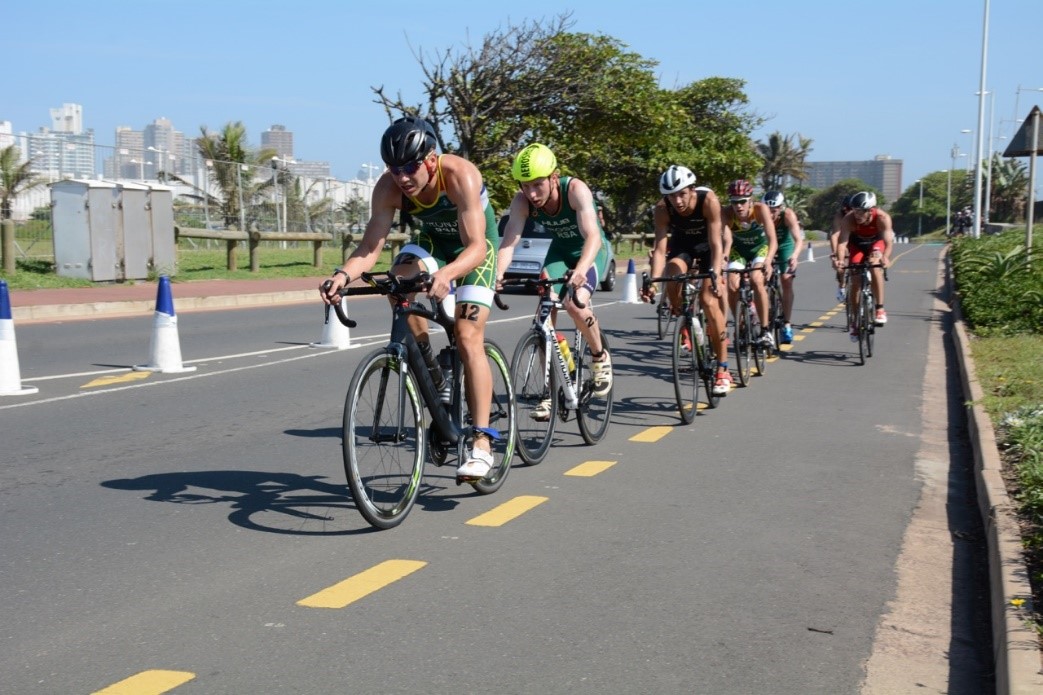
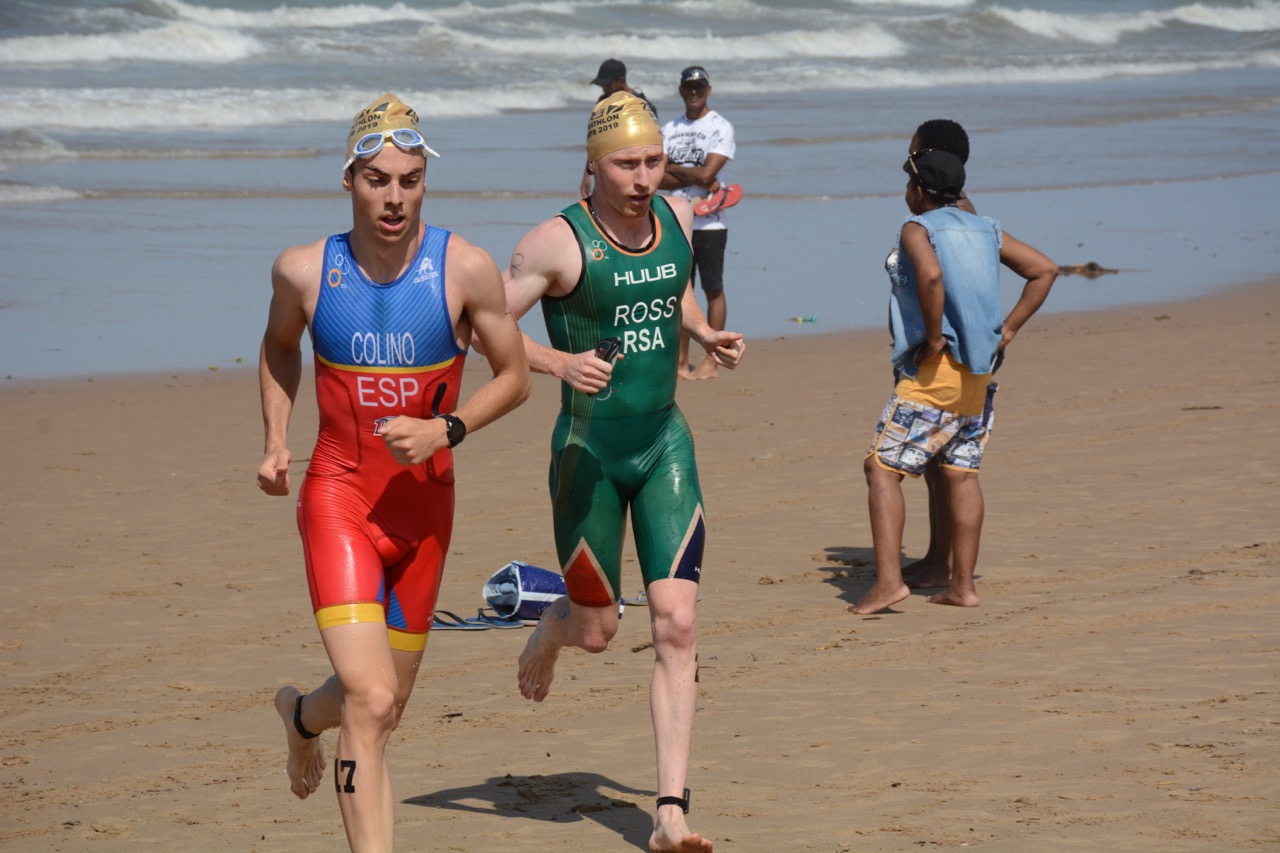
Last weekend I had the incredible privilege of competing as an U23 elite at the South African Olympic distance triathlon championships held in Durban. The race would comprise of a 1.1km sea swim (shortened from 1.5km because of rough conditions), a 40km cycle finished off with a 10km run. This was my first race at such a high level and I was terrified. Firstly, the race was draft legal (i.e. you are allowed to cycle in a group, saving up to 40% of your energy) which meant I would need to channel my inner fish in order to have a good swim and get into a decent group on the bike. Secondly, there were only 25 people entered in the entire race – 8 of whom were from abroad, one has an Olympic Games and two Commonwealth Games medals, and the rest were the cream of the crop in South Africa Olympic distance racing. I felt very much like an outsider, and as a result the only goal I set myself was this: “try not to come last.”

Race day rolled around and the nervousness gave way to excitement. I had the chance of lining up against some of the best athletes in the country, in my home city, with lots of friends and family watching. I was ready to give it my best and see how I compared – that was essentially all I was hoping to get out of the race.

After a quick athlete introduction we headed down to the beach for the start. The gun fired and we all charged into the water, only to be battered back by the incoming waves. The rest of the swim would prove to be equally difficult – constantly getting lifted up and dropped back down by the waves, not being able to see any of the buoys and as is always the case, many mouthfuls of swallowed sea water regurgitated through fits of coughing. After what felt like an eternity I dragged myself ashore (not last!) and came within an inch of complete cramp in both calves and quads. I nevertheless had a decent transition and managed to start of the bike leg with two other athletes (Mike Ferriera and Asher Biggs). We worked well together (credit to Mike for doing some serious pulls on the front and organizing the group) and started to slowly reel in the small groups in front of us. Fifteen kilometers into the ride we had formed the chase pack, a big group of 12 with only a group of six ahead. I was starting to feel quietly confident – I was comfortable in the pack, sure I wouldn’t get dropped on the flat course and knowing my strongest discipline, the run, was still to come. The race was going so much better than I had ever thought possible.

Unfortunately the water was too warm for me to whip out my Zone3 Vanquish

Then disaster struck. I hit a small stone, which being in the pack I didn’t even see, and immediately knew something was wrong. Fifty meters later my suspicious were confirmed – I had a flat back tyre. I rolled to a stop right in front of my stunned family. My race was done. In such a short race, by the time you have changed your inner tube, everyone is already long gone, never to be seen again. I was gutted. This was the last year for me to race as an U23 and I was having the race of my life. I had travelled to Durban from Cape Town, and had spent months suffering in training, mostly alone, getting ready for this one specific race. I had sacrificed time with friends, neglected varsity work and missed time at home. And one small stone made that all seem worthless. I could have been forgiven for throwing my bike into the bushes and storming off.

But people were watching and strangely enough that isn’t what I wanted. I had come to the race to see how I compared, and I had managed to do just that. And while getting a decent result would be immensely beneficial, this certainly isn’t the last race I’ll do, nor is this the limit of my dreams. So I drowned my sorrows with 3 chocolate milks and then spent the rest of the afternoon cheering those still left in the race.

If you look very closely, you can just about see my dreams slowly fading away as the air leaked out my back tyre

Triathlon races are an unpredictable beast. Any number of things can go wrong even if you have done all the training, and are in your best possible shape. Your legs might not feel great on the day, you could get sick, crash or suffer from cramps, all of which prevent you from having the race you were supposed to have. It’s this unpredictable nature which keeps us intrigued and leaves us hungry for more, always in search of the perfect race.

The next day I was given a stark reminder, which very quickly put the race into context. I was scrolling through Instagram, procrastinating getting stuck back into my varsity work, when I came across a post about a young cyclist who had tragically passed away over the weekend. I was bitterly disappointed about how the race played out, but in the end, it was only a race and really not that important in the scheme of things. I have so much more to be grateful for and it is considerably more productive to be thankful for those things than to complain about what could have been.

Train hard, race hard, but always remember the unpredictable nature of the game – it is what we signed up for. And when things go wrong, as they will, pick yourself up, dust yourself off and put that single moment into perspective. Then find another goal to chase.

Happy training,

Mike

Triathlon life lessons

Just the other day I had a serious existential crisis. I am not usually prone to such crises, but as I near the end of my university career, I need to start thinking about my future (it is a scary thought, which is why I have procrastinated thinking about it). Anyway, I realized that triathlon was eating up a lot of my time, energy and money and I needed to decide whether it was worth the effort or if there were better things to pursue. To help with this decision I set about compiling a list of what triathlon had taught me. The list began earnestly but, because I can’t stay serious for very long, it deteriorated into some of the stranger things I have learnt from this wonderful sport.

Racing in Denmark was an incredible privilege

A quick Google search revealed I’m not the only one asking the question “what has triathlon taught me?” It was comforting to see that others were thinking along the same lines as me, because I often feel like I’m slightly off my rocker, and not quite in tune with how the rest of the world thinks. It also appeared that some of the lessons I had learnt had also been learnt by others, how wonderful.

Triathlon rewards hard work. Not just hard work but consistent, smart work. The people who achieve in this sport are those who successfully get the combination of those three right. Tied to this, I have also learnt to do things even when I don’t want to, even when I really, really don’t want to. The days when I consider faking a cramp in the swimming pool, puncturing my own bicycle tyre or purposefully leaving my running shoes at home. All of these apply to life in general, where success is the result of hard work and you regularly have to do things you really don’t want to, such as studying Afrikaans at school. I did not like Afrikaans.

I have also learnt how to manage my time. I know I’ve got a session in the morning and another one in the evening. Between those I’ve got to get my varsity work done, occasionally cook, check Strava multiple times and maintain my social standing (admittedly that isn’t particularly difficult considering I talk to a handful of people a week, of which I train with half and live with the other half) plus get enough sleep. All this has taught me to minimize distractions and work fairly productively most of the time. A useful skill I think you’ll admit.

After looking through numerous online pages, I was convinced I had learnt many useful skills that would prove immensely valuable at some stage of my life. While I could regurgitate what these pages had said (adding my own unique twist of course), I thought it would be much more useful to venture into the unknown in search of the more obscure life lessons which are yet to grace the first page of a Google search on this topic.

The other day I went to the beach. I hadn’t left home in my costume, so when we arrived, I disappeared to get changed. I didn’t rush the transition, but when I left the change room my friends were mightily impressed with my quick turn-around. “What do you expect? I’m a triathlete…”

How not to sleep in class. This might seem a simple task, but it does in fact require a colossal effort. Picture this: you’ve had an early morning training session, it’s a warm day in the classroom just before lunch time and your teacher is reading through Macbeth…thy eyes doth slowly close. I’ve taken to always carrying a pen in my hand, which as I drift off, falls to the floor, abruptly waking me with a mini heart attack. Alternatively, I bring a bag of peanuts and raisins which I snack on throughout the lesson or throw at unsuspecting victims (my years of playing cricket really serve me well).

Always use anti-chafe cream. I’m not sure exactly how this is a life lesson I have learnt from triathlon, but as I prepare for some imminent suffering on my bicycle, it seems pertinent. Perhaps the lesson is this: it’s the little things that matter. The difference between a successful cycle, and walking with your legs outspread, crab-like, for the next week might be down to a little anti-chafing cream. Similarly in life, little things can make a huge difference: checking in on someone with a message, wearing your seatbelt or brushing your teeth before a meeting.

It seems triathlon has taught me an incredible amount, and it will continue to do so. I hope this post has either inspired you to continue pursuing this fantastic sport, or challenge yourself by taking up a new sport. Either way, I would love to hear your thoughts about what I have written and whether you have any ideas for future posts, or questions I can answer.

Happy training,

Mike

Behind the tri(suit): what being a triathlete is really like

The life of a triathlete is full of glitz and glamour – adoring fans, huge prize purses and shiny equipment (alright, I might have made some of that up). In truth the life of a triathlete is a strange existence with all sorts of perks and quirks, many of which are truly unexpected. Case in point: I’m 22 and yet my mom was able to buy me a pair of pyjamas from Kidzgear, for 13 to 14 year olds…which fit perfectly (they were a quarter the price of adult pyjamas – oh the joys of being lean [a much better word to insert than “small” or “scrawny”]). I hope you can relate to at least a few of these, either because you see them in yourself or in someone close to you.

Swim

When I picture myself swimming I look like one of those guys at the Olympics, effortlessly gliding through the water, a child of the sea. I have zen-like focus: monitoring how my hand enters the water, how I follow through and what my legs are doing. In reality I make comparatively little forward progress and the only zen-like focus I display is spending the entire session trying not to pee in the pool (probably as a result of having 5 cups of tea too many that morning – some days the only liquid I get in is as a result of drinking tea).

Life at the swimming pool is a life of extremes. Either I am patiently waiting for a lane or I am charging through the set with military precision in an attempt to leave gym before my free parking runs out. The tight timelines sees me regularly dashing out of the gym scantily clad in my costume with bags flailing behind as I race towards the ticket machine. Surely this is the 5th discipline of triathlon after nutrition?

Waiting patiently for a lane

Bike

The cycling aspect of triathlons is no less fraught with interesting situations. For me personally, the worst part is avoiding the piercing stares of “real cyclists” who tell me off for not shaving my legs – I am incredibly lazy in this department. Fortunately, while I may be scrawny, it is nothing compared to a cyclist, so if it ever came down to a brawl I would back myself (though when confronted with a larger cyclist I would as least back myself to be able to run faster than him/her).

In case you were wondering the real reason we all cycle, I’ll tell you: calves. All cyclists and triathletes are locked into the glorious pursuit of the perfect calves. It explains the cyclist sock length, halfway up the calf, accentuating what may or may not be there. It explains why most cyclists shave their pistons (and perhaps why I don’t). I’ll quit this sport when I have something more than Vienna sausages for legs.

Run

If there is one golden rule for running it’s this: always go to the bathroom before you run. It doesn’t matter if you have to sit there for half an hour, the alternative is visiting a public toilet along the way, or in extreme cases, referring to the wisdom of my old cricket coach: “every tree is a lava-tree.” If you ever need a topic of discussion with someone involved in running try this, for every single runner has a story which they’ll repeat with a sort of embarrassed fondness.

I’m not sure if it’s just me, but whenever I go running I find rivers of sweat pouring down me. Just the other day I was stopped at a traffic light, with the windows open in an attempt to clear the air of the pungent smell of sweat. Anyway, someone pulled up and piped out: “did you go swimming?” Unfortunately I had only returned from a light jog. That much sweat.

Other bits and pieces

Triathlon can only be done successfully if it becomes part of your life style. As a result, the weird and wonderful aspects of the sport creep into all sorts of unexpected places. Perhaps not so unexpected, but nevertheless unusual is laundry. I do laundry at least 3 times as often as a normal person. The washing contains maybe one shirt and a pair of shorts, but otherwise is exclusively sport’s related. At least it doesn’t take long to dry.

Considered the 4th discipline of triathlon, nutrition is extremely important to triathlon performance. I find it difficult to eat enough to sustain all the activity I do. As a result, I lean heavily on a few calorie dense foods. My particular favourite is peanut butter. I eat a lot of peanut butter. When I say “a lot”, I need you to understand the severity of the situation. I eat 2 of those 400g jars every single week, sometimes even more than that. Surely I can’t be the only one? In any case I am certain every triathlete consumes something in copious, worrying amounts.

A couple months’ worth of peanut butter jars

Maybe triathlon isn’t full of glitz and glamour (well at least not in the traditional sense), but there is no other sport I would rather be doing. I’ve got some incredible stories and memories to last a lifetime. Dive in!

Happy training,

Mike

Do things that scare you

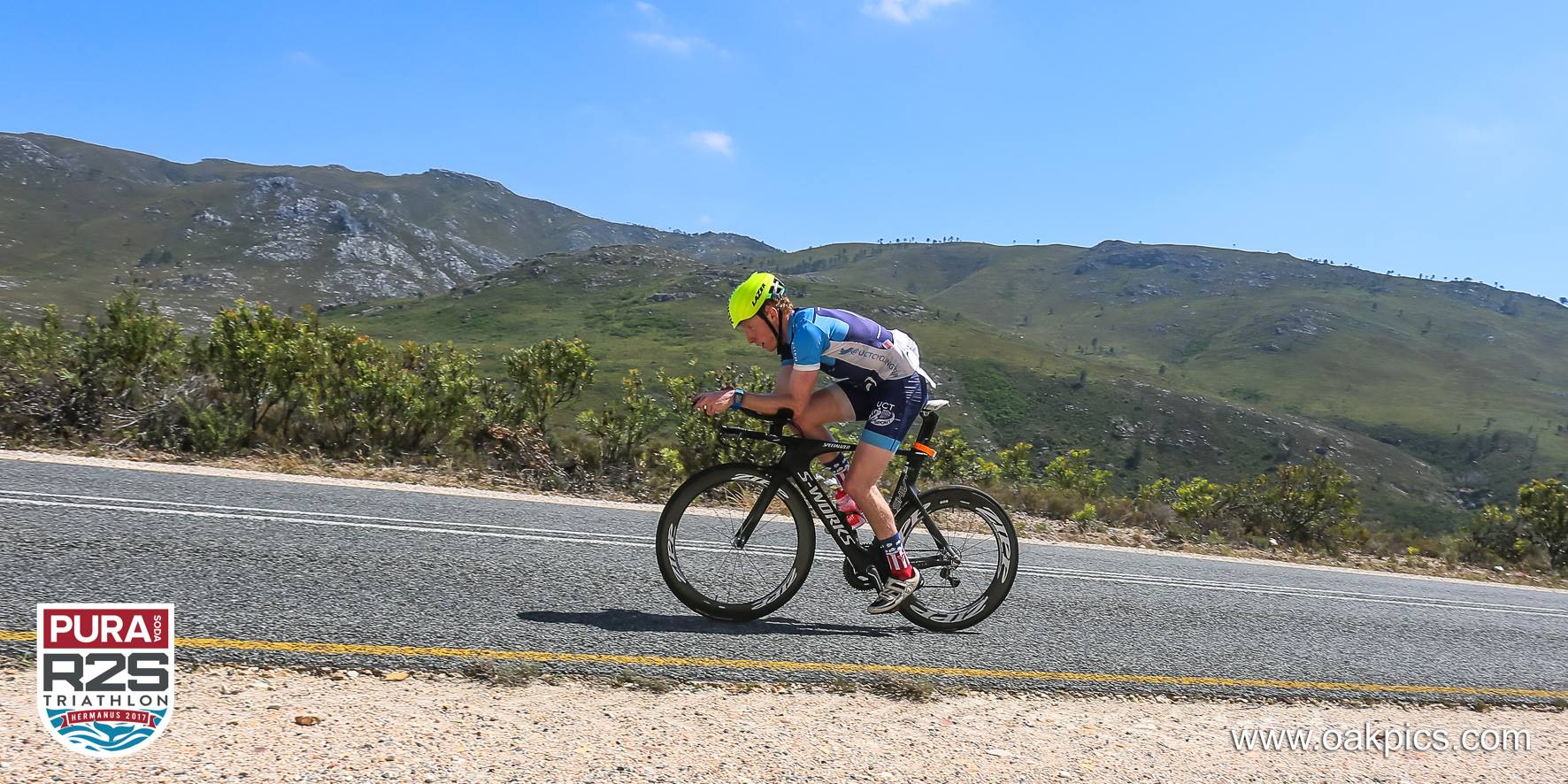
Almost a year ago to the day I was on the start line of a race which terrified me – the infamous Double Century. The race consists of a 202km loop starting and finishing in Swellendam, in the Western Cape and is done in a team time trial format (i.e. you start with 12 team members, and your time stops when the 6th team member crosses the finish line). Aside from the distance, which was much further than I had ever ridden, I was part of the incredibly strong UCT train – a team of which I was almost certainly the weakest member, definitely in the bottom three. Nevertheless I was determined to prove to the team captains who had chosen me that I was fit for the job. No stone was left unturned in my pursuit to be as strong as I could on the day, including shaving my legs, a particularly uncommon and laborious experience. Come race day, I was ready.

Fear of the race was justified, as merely 10km in I felt as if I could crack/blow up/explode/hit the wall at any moment (accompanied by the voice of the imaginary commentator in my head saying: “his goose is cooked”). And yet somehow, I made it to the finish…UCT crossed the line as the 7th placed team overall and the first with all 12 members across the line, coming home in under 5 hours. The race was almost certainly hardest thing I have ever done, but completing it has opened my eyes to all I’m capable of. When I’m struggling through something I look back on that day and think: “if I got through that, I can get through this”.

In just over a week’s time, I am going to attempt my first half iron distance race, the MiWayLife Joburg Ultra (for those of you who don’t know, it involves a 1.9km swim, 90km cycle and 21,1km run) – and once again I find myself feeling terrified. I worry about how my body will deal with a race of this length, particularly having to do a long run after a long cycle. I worry about getting my nutrition wrong and either running out of energy or having to deal with cramps. I worry about my back getting really tight, because I haven’t spent all that much time in the time trial position. I worry about disappointing not only myself, but all those invested in me – my parents, coach, sponsors.

Aside from the nerves, I am extremely excited to push myself to the limit and find out just how much my body can take. I’ve done all the training, this last week is about resting up to ensure I’m fresh come next weekend.

I did the cycle leg of a half iron distance race as a trial run before I completed all three disciplines at once. I was hoping the race would help settle my nerves but if anything it has made me even more nervous about the real thing! Massive respect to everyone who has conquered this distance, and those who have gone further

These last couple of weeks of training have been really draining. Fortunately, having just finished at varsity for the year, I’ve been able to rest and recover sufficiently. I’m in awe of all those who have managed to complete the training while holding down full time jobs, studying or coping with the other stresses life throws at you – I’ve essentially been living the life of a professional athlete and I have really struggled.

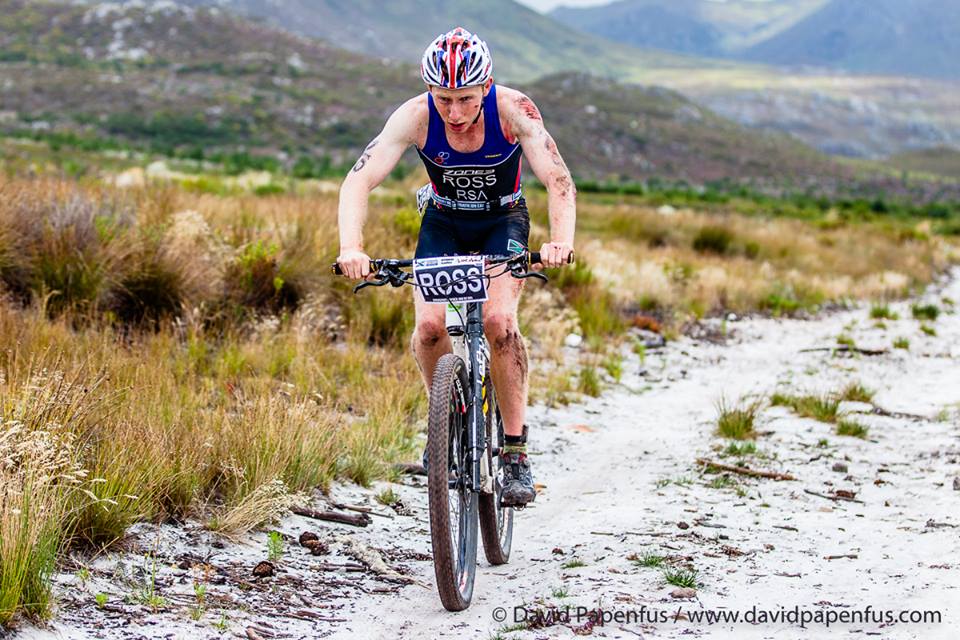
Triathletes in general often don’t have any problem with big hairy audacious goals (picture someone doing an Ironman, or running the Comrades), but scary things aren’t always the big goals. Most of the scary things we need to tackle are not necessarily scary sounding to the outside world, but may be even more difficult for us to overcome. Many triathletes really struggle with open water swimming – even more so when this happens in the ocean. The frenetic mass start, waves, inability to put your feet down, fear of the unknown are enough to make almost everyone worry at least a little bit. Having grown up near the coast, I am fortunate to have avoided this specific problem, but that doesn’t mean I don’t have other difficult things to deal with. While this might surprise you, considering I have raced off-road triathlons regularly and at a high level, I am scared of technical riding. This fear has probably been fostered by the numerous falls I’ve had off mountain bikes in the past few years (I can easily count 10, with at least that number having occurred on a single corner which forms part of the UCT cross country track). I can count many times where I have watched a whole team of school kids ride fearlessly down a technical trail, only for me to walk down a couple moments later. Having identified this fear I am working slowly but surely to fix it – practicing on easy trails, riding with other people, working on my balance on the bike. I think I’m on the path to turn this fear into a strength.

Reminding myself to be brave

In much the same way you can take steps towards overcoming your fears. While they don’t have to be big steps, or quick steps, regular plodding in the direction of your goal will yield incredible results. Let’s do this together.

Happy training,

Mike

The training reality

Training for a triathlon is tough. There are usually multiple sessions during the week when I question the sanity of my coach. Times when I wonder how on earth I am going to complete the prescribed workout. Other days the conditions force me back into bed: the wet, the cold, the wind, the dark. Triathlon is not the centre of my world…there are sessions I have to miss because something more important comes up. Some days I just can’t – there are a number of occasions where I have given up and gone home. Three days ago I swam 500 meters when I had 4 kilometer planned. And, though it might surprise you to hear this, I think that’s alright.

Don’t get me wrong, consistency is absolutely critical to success in this sport. It is perhaps the single biggest differentiator between reaching your goals and falling short. It is however important to recognize that there are occasions when sport has to take a back seat. Other times your body needs the rest, and giving it some time to recover may be far more beneficial than pushing through. That said, this post is not about excusing missed sessions – it is about helping you push through when you really don’t want to.

I was initially reluctant to get a coach. I loved having the freedom to do what I wanted, when I wanted. And having more money to buy food each month (being on a student budget does have some quite severe limitations). After feeling like I had reached a plateau in my training, I decided to give it a go. The results have been tremendous. The specificity of the training – sessions tailored to get the best out of me – has been incredibly useful. Though probably the most important part is that I know there is someone constantly looking over my shoulder asking why I didn’t complete a session. When it is 10°C at 4:30 in the morning it is very easy to convince yourself you don’t have to go out cycling, but it becomes much more challenging explaining the missed session to your coach a few hours later.

I cannot overemphasis the role training partners have had in my triathlon journey. Knowing someone else is expecting me has gotten me to more training sessions than I can count. Even if we aren’t doing the same session, having someone else share the pain makes it that much easier to bear. One of the reasons I love this sport is the people you get to meet, and there is no better way to get to know someone than being with them in the midst of shared suffering.

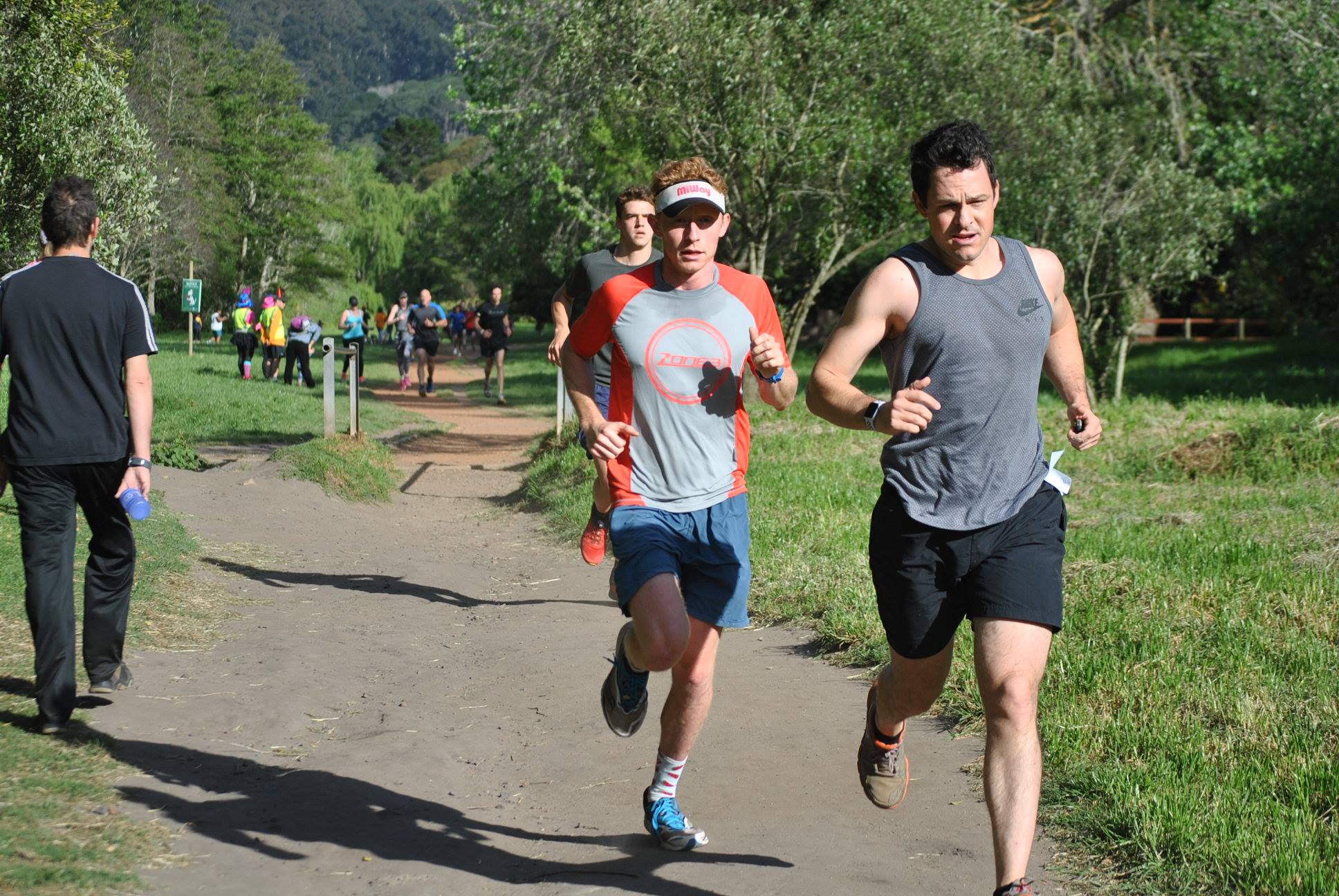
Taking part in a local parkrun gives you a chance to run with so many others. I always seem to get a little too competitive though!

At some point in time we will all be faced with training alone. That isn’t necessarily a bad thing, it just requires motivating yourself with a slightly different tack. I’ve often heard people suggesting you think about an upcoming race, or the reason why you started triathlon in the first place. And while that might work for some, and under certain circumstances works for me too, often it just doesn’t cut it. If I really don’t want to do a session, it takes a lot more to inspire me to get out the door.

Sometimes it is necessary to treat myself like a small child. I regularly use bribery, generally in the form of chocolate, to get myself through a session. I either have chocolate before a session, and use this as a reason to exercise (I need to burn off all the calories I just ate*)[*disclaimer: this is a double edged sword. You may find yourself eating the chocolate and then not exercising. In which case all you have succeeded in doing is putting on the pounds. However, the chocolate might make you happier, in which case it seems warranted] or throughout the session continuously think about the chocolate I will receive when I’m finished.

I’m not sure fueling every session with chocolate is the best long term solution, so I’ve had to come up with other plans. I have recently started listening to podcasts, especially while riding on the indoor trainer. These provide a welcome distraction particularly during long indoor rides. Perhaps the weirdest tactic I have resorted to, is shouting at myself. Looking back it is particularly weird when it happens when I’m on a Wattbike inside a crowded gym. Though if it gets me through the session…

I am writing this as much for myself as anyone else. Reminding myself that not every session will go perfectly, and that’s okay. But also reminding myself about all the times I’ve pushed through when I didn’t think I could and how much better an athlete I am because of it. You can do the same. I’ll see you out there.

Happy training,

Mike

Be prepared

One of the reasons I am most excited about this blog series is that I am given an opportunity to tell my stories. While there are countless ones to be told, today’s stories will focus on the age old saying: “be prepared.” Unfortunately it is only after many instances of being unprepared that I’ve come to realize the saying might just have some merit.

Triathletes in general relish adventure. We are thrill seekers. We love the feeling of adrenalin coursing through our veins. While I am no different, I decided to take things to another level. It involved playing a sort of Russian roulette. The game was this: “wouldn’t it be fun to go cycling with no spares?”

Punctures are a minor, yet inevitable annoyance in cycling. That is unless you don’t have spares, in which case they can be a major annoyance. While merrily cycling along one fateful day I recall the distinctive hiss and associated drop in tyre pressure. My heart sank. The game was up. This was slightly problematic. I got on the phone to my managers (aka mom and dad) who berated me for my stupidity and told me to sort myself out. Things were now slightly more problematic. After running through all my options, I was left with no choice besides walking back home. 5 kilometers of deep introspection and questioning my life decisions lay ahead.

  With shoes in hand, and pushing my bike I started the long trudge home. It was the middle of the day, but I was hopeful someone would offer this sad looking young lad a lift. With each car that drove past, my hope of a lift decreased. That is until one bakkie stopped. This was it! I was about to be rescued from my pit of despair. The window wound down and “can you point me to the post office” poured out. I took a while to regain my composure and then described the way to the local post office. An hour and a half later I had finally managed to drag myself back home. Lesson learnt!  

There is nothing better than having a friend who is just as crazy as you. I am fortunate to have one of those friends – his name is Tim. Since we had arrived in Cape Town to attend university, we had been planning an epic mission: run from UCT to Kirstenbosch and up Skeleton Gorge (roughly 8 kilometers with 700 meters climb). We would spend the night on top of Table Mountain, enjoy the sunrise and be down for breakfast the next morning. After many days spent discussing the adventure we decided to go for it. My dad had been visiting, so we were only able to start at 9pm. It had been raining all day, and was rather cold.  Undeterred we headed out with headlamps, and small backpacks containing only the essentials. We made it to the top of Skeleton Gorge around 10:30pm and started organizing our sleeping spot. We built a wind break from rocks, and then settled down for some well-deserved rest.

It was immediately apparent that there would be no such “rest” happening that evening. We had chosen to sleep on sand, which while comfortable, sucks away all your body heat, particularly if it has been raining all day and the sand is freezing cold. I’m not sure how many of you have had the “privilege” of sleeping in a bivvy bag, so picture this: it is the thickness of about 3 black bags, and slightly longer than you are. It provides about as much warmth as you would expect – not much! In order to conserve weight for our run, the two of us had neglected to bring sleeping bags, and all we had were long pants and jerseys. It was so cold we each spent the night hugging our knees and shivering from the cold at the bottom of our respective bivvy bags, questioning our sanity. We were both too stubborn to say anything about heading home early, and chose instead to wait it out until sunrise.

I have never been so happy to see a sunrise in all my life. As soon as it got vaguely light, we went chasing the warm rays, happy for the chance to defrost. With no further ado, we headed back home for a quick shower and then went straight to bed. Lesson learnt!

I’m not sure I adequately described the ordeal, so I asked Tim for his thoughts on that fateful evening: “driven by stubbornness, our supposed hard-coreness and the hope of a good sunrise, we sat there hugging our knees and freezing out asses off for the better part of 6 hours, while our nice warm beds lay empty just 5kms away.”

I should tell you to always be prepared. To triple check that you have the correct equipment to cater for every eventuality. But that isn’t the point. It is something each one of us has to figure out for ourselves. And if we were always prepared, there wouldn’t be nearly as many stories to tell.

Happy training,

Mike

Dealing with an injury

It is with some excitement and a great deal of surprise I find myself writing the second instalment of my blog series. While I thoroughly enjoyed putting the first piece together I really wasn’t sure anyone would be interested in another. Fortunately I have this opportunity, and I really hope you enjoy what follows. Once again, any comments would be very much appreciated.

My first ride with cleats was memorable to say the least (cleats allow you attach your shoes to your pedals – and yes, they can sometimes be as silly as they sound). My brother and I decided our first expedition should be to ride some of the technical mountain bike trails at our local bike park. After successfully navigating one of the steep descents, I waited for my brother at the bottom of the trail. Unfortunately with all the adrenaline coursing through my veins having not fallen on the descent, I promptly forgot about uncleating, and so fell over when I came to a complete stop. It is notoriously difficult to uncleat while lying sideways, down a bank, in some bushes, but somehow I managed to escape. A quick once-over revealed a fairly deep cut, but being out in the wilderness we had no choice except riding back to the trail centre.

I will pick up the story when my brother and I made it back to our parents. I must confess that my dad is a doctor, and after assessing my wound he decided stitches were needed. Furthermore, he was absolutely convinced he would do them himself! It was with great sadness that, after phoning all the local hospitals and pharmacies, he was unable to acquire the necessary suture material, so off to the hospital we went. Upon arrival the emergency room was packed, with many more urgent cases. Not to worry, Doctor Dad was on hand. Dad went in search of one of the doctors who actually worked there, and told the doctor he was happy to stitch me up himself, with hospital equipment. The doctor refused, and I was attended to a little while later. In hindsight, it was probably a blessing in disguise, because when it came time to remove the stitches, I had to take them out myself because dad’s vision wasn’t quite what it used to be…

The next major fall happened at Xterra Grabouw at the beginning of 2018. This is an off-road triathlon comprising of a 1.5km swim, a 25.6km mountain bike ride and a 12.4km trail run. The mountain bike course is particularly brutal, and strikes fear into the heart of those who are predominantly road cyclists (me!). It seems said fear was justified, as I took a tumble on one of the sections of uphill singletrack. I came off again after underestimating the last rock on the infamous rock garden. And again 1km before the transition. I was battered and bruised, but managed to drag myself to the finish line. The only consolation was that I got some epic pictures taken on route, which I think made me look hard core. And after a week of no swimming, I was good to go.

I can only recall one major triathlon injury – it is in fact something I’m still dealing with. Near the beginning of June 2018, I fell off my mountain bike. By now I am sure you have realised that this is a common occurrence. I was left with a few scrapes, and so took a couple of days off to recover. My first run back went well, but afterwards I could hardly walk. This was 6 weeks before Cross Triathlon World Champs, so I rushed off to the physio in a desperate attempt to uncover the problem.

Fast forward 5 and a half weeks. I had visited the physio numerous times. I had done my stretches. I had seen an orthopedic surgeon. I had spent session after session having the joy sucked out of me on the elliptical. I had tried aqua jogging. I had done everything I could possibly do. And yet somehow I found myself forced to hobble home 6 minutes into a run – my knee was playing up and I could hardly walk. The biggest race of my life was 3 days away. I was devastated. When I got back I lay miserably on the bed for a couple of hours, stuffing my mouth with chocolate in a desperate attempt to console myself.

The day before the race, I developed a deep sense of calm. Sure there was every chance I might not finish the race, but there was now nothing I could do about it. While the race was an incredible opportunity, it was but a step in my triathlon journey, and not the final destination. Regardless of whether or not I finished, I would have the chance to line up against the best in the world, and would learn so many lessons.

I decided to play it safe, and so didn’t run again before race day. Considering the disastrous run 3 days ago, I was fairly certain I would be unable to complete the race. I was however determined to at least start. On race day I managed to finish the swim and the cycle and then laced up for the run. I left transition feeling decent, and miraculously ran the whole way. I was overjoyed to cross the finish line.

I sit here writing this piece still not completely recovered. I have been instructed to take 2 weeks of complete rest, before easing back into things. While this might be hard at the moment, I have many more years in the sport and it is much better to be completely recovered as opposed to rushing back in and making things worse. The break has given me time to spend doing many of the things I miss out on during a busy training block. This injury has been one of the most challenging stages of my triathlon journey, but maybe, just maybe it is a blessing in disguise.

Happy training,

Mike

Slow down and smell the fynbos

I’ve decided to give writing a try. Not because I’m full of great advice but rather sharing some of my experiences with others who might be feeling similar. I am still not completely sure anyone will read this, but if you do, please let me know what you think. I would really appreciate that

Before I get really stuck in, I thought I should elaborate on who exactly “I” am. My name is Michael Ross – not the guy from the series “Suits”, or the serial killer you’ll come across if you type my name into Google. Rather I am a 21 year old Biology honours student at the University of Cape Town. I have loved sport for as long as I can remember. And while I have been good as many sports, I’ve never been great at any one sport. I thought I might as well give it a try by jumping into triathlon (I guess that means technically I still have a few sports to keep myself busy).

I recently had the privilege of competing in ITU Cross Triathlon World Championships in Denmark. I raced as an U23 elite. It was my first race on such a big stage. Immediately after the race however, I was left feeling slightly disappointed. I had a great swim and run, but leaked a lot of time on the bike. I had been working really hard on my cycling leg, but clearly hadn’t spent enough time on technical trails. Even during the race I was planning how I could be better prepared for future races.

Triathletes are often extremely goal driven. We set goals and then work really hard towards achieving them. Once we reach a goal, we very quickly set another. While this prevents complacency, it means we never really reflect on just how far we have come. How participating in this sport isn’t so much about the destination as it is about the journey.

The first triathlon I did was in late 2013. I came into triathlon from mainly team sports. It would be a real stretch to say throwing a cricket ball helped develop my swimming technique. After the gun fired, I nervously entered the water, feeling a little cold in my skimpy speedo. After a not-so-speedy transition I left on my mountain bike, with slicks applied in a futile attempt to keep up with the roadies. After haphazardly navigating the course, I started out on the discipline I was most comfortable with: the run. Arguably it wasn’t quite as comfortable as usual. My legs felt like jelly, and the running in cycling shorts isn’t ideal. I crossed the finish line feeling like a total wreck, but I was completely hooked.

Fast forward a few years, and things are a little different. Just under a week ago I lined up against 40 of the best off-road triathletes in the world, in national colours in the beautiful country of Denmark. It was a dream come true. And while I didn’t have quite the race I was hoping for, it was still much better than I could have ever dreamed of. I know I’ll soon set myself some new goals, for the moment it is important to look back and realise just how far I’ve come.

So if I have any advice to leave you with, it would be this: stop, for a moment, to look back at how far you’ve come, take time to “smell the fynbos”. The experiences you have had, the friends you have made, the places you have been, all because of this wonderful sport of triathlon. But don’t spend too long dwelling on the past because you’ve got some new goals to chase.

Happy training,

Mike

Design a site like this with WordPress.com
Get started